Setting up
Setting up a robot vacuum so it still works in month six
Setting up a robot vacuum: dock clearance, thresholds and cables, a schedule that suits the house, filter intervals, recall checks and end-of-life takeback.
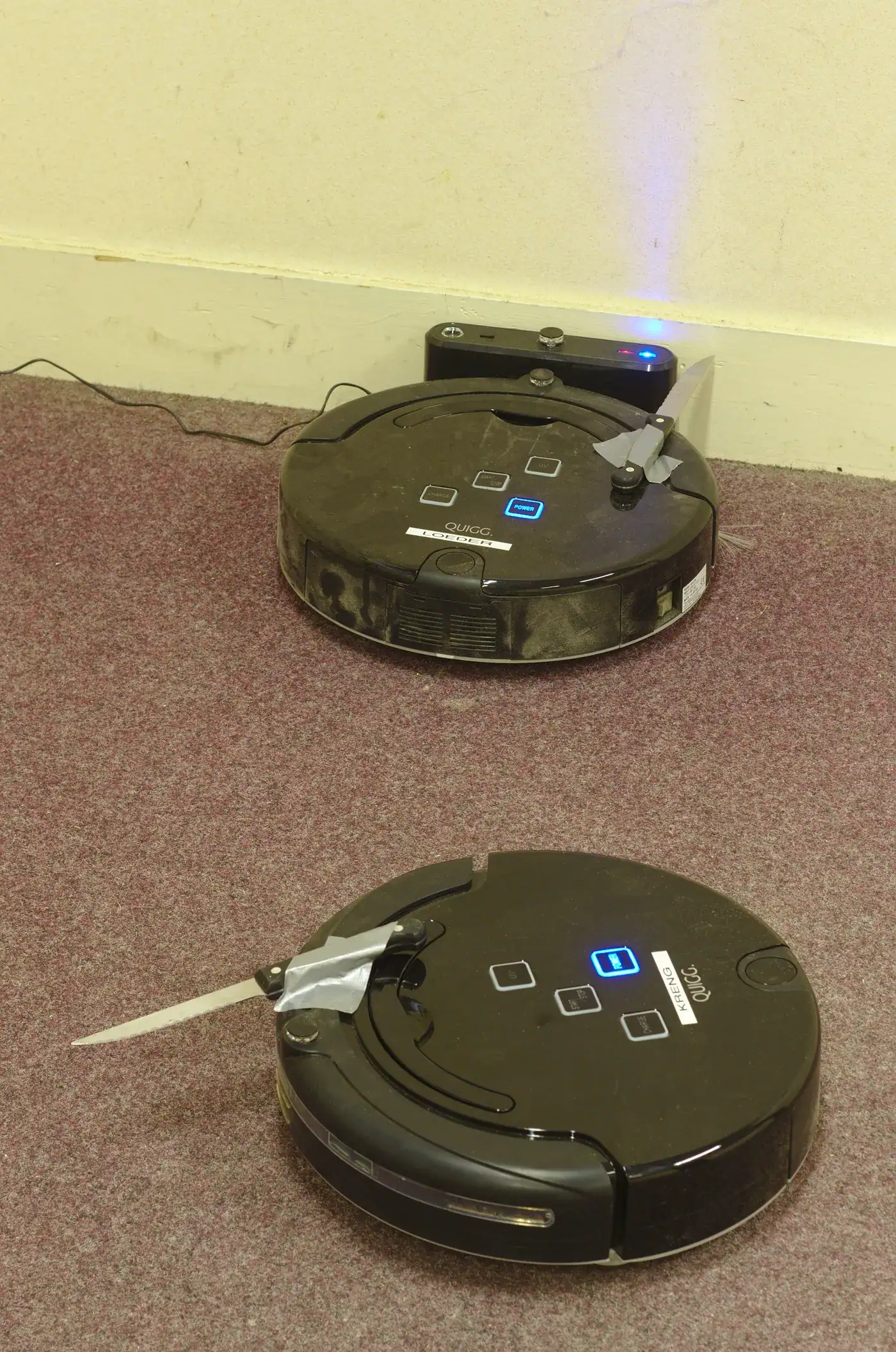
A robot vacuum fails in a home for mechanical reasons, not clever ones: a dock it cannot find, a threshold it cannot climb, a cable it eats, a bin nobody empties. Almost all of them are fixed once, in the first hour, and almost none of them are fixed later.
This guide is that first hour, plus the two maintenance intervals that decide whether the machine is still working in year three, plus what to do with it when it is finished. It names no products and reports no test results.
Where the dock goes, and why it matters
The dock needs a flat run of wall on a hard floor, with clear space either side and in front so the robot can approach it squarely. Put it in a corner, behind a door or on deep pile and the robot will spend part of every run failing to park, which drains the battery and eventually produces a machine that is always somewhere else.
Keep the dock on a socket you can switch off, because on the example figures in our running-cost guide a dock drawing a continuous 2 W uses 17.52 kWh a year, or £4.61 — about 62% of that robot's total electricity. A switched socket turns that into a decision rather than a fixed cost.
Give the dock a permanent home in the room the robot cleans most, not in the hall where it is out of the way. A dock that is moved every few weeks forces the machine to rebuild its map, and a rebuilt map loses every no-go zone you set up.
| Choice | Result |
|---|---|
| Flat wall, hard floor, clear either side | Reliable docking, stable map |
| In a corner or behind an open door | Approach angle fails, robot parks beside the dock |
| On carpet or a rug edge | Wheels slip at the ramp, charging contact intermittent |
| Moved between rooms every few weeks | Map rebuilt, no-go zones lost each time |
| On a switchable socket | Standby draw becomes optional rather than permanent |
Twenty minutes that prevent most of the call-outs
Three things strand robots: cables, light objects that get dragged, and thresholds. Deal with all three in one pass. Clip or box every floor-level cable, including phone chargers and the loop behind a television stand. Lift rug fringes and tassels, which are the single most reliable way to jam a brush roll. Then walk the route and find every threshold the machine has to cross.
Thresholds are a measurement, not a judgement. Measure the height of each one and compare it with the climb height the maker states. Where a threshold is too high, either fit a small ramp or accept that the room is a separate cleaning zone and set it up that way deliberately.
Finally, run the machine once while you are in the house and watch it. The first run is diagnostic: it tells you which chair legs it wedges under, which door closes behind it and which dark rug it treats as a drop. Fifteen minutes of watching replaces weeks of being puzzled.
- Clip or box every cable at floor level, including charger leads
- Lift or tuck rug fringes and tassels before the first run
- Measure each threshold and compare it with the stated climb height
- Remove light objects a robot can drag: pet bowls, doorstops, slippers
- Run the machine once while you watch, and note where it gets stuck
- Set no-go zones only after that first run, not before it
A schedule that matches the house
Daily short runs beat weekly long ones for a robot, because the machine is designed for maintenance cleaning rather than for recovery. A 40 minute run in the main living space every day keeps the floor at a level a weekly run never reaches, and it costs about £2.88 a year in electricity on the assumptions in our running-cost guide.
Schedule it for when the house is empty. A robot running while people are moving around is interrupted constantly, maps badly and gets picked up, which is the fastest route to a machine that lives in a cupboard. Mid-morning on weekdays suits most households.
Set the bin emptying on the same rhythm. A small bin emptied every second day is less work in total than a large bin emptied when it jams, and the machine runs at full airflow throughout rather than tailing off across a week.
| Task | Suggested interval | What it prevents |
|---|---|---|
| Empty the bin | Every 1 to 2 runs | Falling airflow and a jammed inlet |
| Clear hair from the brush roll | Weekly | Belt and bearing wear, dragged carpet |
| Wipe the drop sensors and charging contacts | Monthly | Phantom cliffs and failed docking |
| Wash or replace the filter | Per the maker's stated interval | Re-emitted dust and reduced suction |
| Check the OPSS recall notices | Twice a year, about 5 minutes | Running a product subject to a safety notice |
The intervals above are a starting schedule for a household of two to three people. A home with pets or long hair will want the brush roll cleared more often than weekly.
Checking for safety notices, and the end of life
The Office for Product Safety and Standards publishes product recalls, product safety reports and product safety alerts on GOV.UK. Recalls cover specific products sold in the UK and may require you to act to receive a free replacement, repair or refund, and the notices identify products by name and model number. Photograph the rating plate under the machine when you set it up and the check takes 5 minutes.
When the machine is finished, there is a route for it. GOV.UK's guidance on electrical waste states that a retailer must provide a way for customers to dispose of old household electrical and electronic equipment when selling them a new version of the same item, either through in-store takeback, an alternative free take back service, or by joining the Distributor Take Back Scheme. The obligation applies across retail, online, mail order and telephone sales.
That matters more for a robot than for most appliances, because the battery is the part that ends its life and a lithium pack is not a bin item. Buying the replacement machine from a retailer that will take the old one makes the disposal somebody else's logistics problem rather than yours.
The six-month review
Put one 15 minute review in the calendar for six months after setup. Three questions: is it still docking reliably, is the brush roll clear, and has anything new appeared on the floor that it keeps catching. Most homes acquire a new rug, a new cable or a new piece of furniture within that window, and the robot's performance degrades quietly rather than failing visibly.
The same review is the right moment to price the consumables you have actually used. If the filter interval you set is being met and the brush roll is sound, the machine is on course for the years the cost-per-year calculation assumed. If neither is true, the honest figure is worse than the one you started with, and it is better to know in month six than in year three.
- Is the robot docking first time, every time
- Is the brush roll clear of hair and the bin being emptied on schedule
- Has new furniture, a new rug or a new cable appeared on the route
- Are the drop sensors and charging contacts clean
- Has the filter been washed or replaced at the maker's stated interval
- Has the model appeared in any OPSS safety notice since you bought it
Before you buy
- Give the dock a permanent place on a flat wall, on hard floor, with clear space either side
- Put the dock on a switchable socket so standby is a choice
- Clip or box every floor-level cable before the first run
- Measure each threshold against the stated climb height
- Watch the whole first run and note every place it gets stuck
- Schedule daily runs for when the house is empty
- Photograph the rating plate and check the OPSS notices twice a year
- Plan the disposal route before the battery fails, using retailer takeback
Questions readers ask
- Where should the dock go?
- On a hard floor against a flat run of wall, with clear space either side and in front so the machine can approach squarely, in the room it cleans most. Corners, spaces behind doors and rug edges all cause repeat docking failures. Keep it on a switchable socket so the standby draw, about £4.61 a year on our example assumptions, is a choice.
- How often should I empty the bin?
- Every one or two runs for a machine cleaning daily. A small bin emptied frequently keeps airflow at full strength and is less total work than a large bin emptied when it jams. Pair it with a weekly check of the brush roll for wound hair, which is the part that causes belt and bearing wear if it is left.
- Why does my robot keep missing the dock?
- The three usual causes are a dock placed where the approach angle is blocked, dirty charging contacts or drop sensors, and a map that was rebuilt after the dock moved. Clean the contacts and sensors monthly, give the dock a permanent position on a flat wall, and re-run the mapping once rather than letting the machine rebuild it piecemeal.
- How do I check whether my machine has been recalled?
- Search the product safety notices the Office for Product Safety and Standards publishes on GOV.UK. They cover recalls, safety reports and safety alerts for consumer products sold in the UK, identify products by name and model number, and say what action is required, which may be a free replacement, repair or refund. Photographing the rating plate at setup makes it a 5 minute check.
- What do I do with the machine at the end of its life?
- GOV.UK states that a retailer selling you a new version of an item must provide a way to dispose of the old one: in-store takeback, an alternative free take back service, or the Distributor Take Back Scheme. That covers online and telephone sales as well as shops. It matters for robots because the lithium battery is not a general waste item.
- Is a daily schedule better than a weekly deep clean?
- For a robot, yes. The machine is built for maintenance cleaning rather than recovery, so a 40 minute daily run in the main living space holds the floor at a level a weekly run never reaches. On the assumptions in our running-cost guide, an hour a day of cleaning costs about £2.88 a year in electricity.
Sources
- GOV.UK — Product recalls and alerts, published by the Office for Product Safety and Standards — checked 2026-11-03
- GOV.UK — Electrical waste: producer, retailer and distributor responsibilities (in-store takeback and the Distributor Take Back Scheme) — checked 2026-11-03
- Ofgem — Energy price cap unit rates and standing charges (26.32p per kWh, direct debit, 1 October to 31 December 2026) — checked 2026-11-03
Advertising is not enabled on this site yet. When it is, ads will be labelled and kept visually separate from the guides.